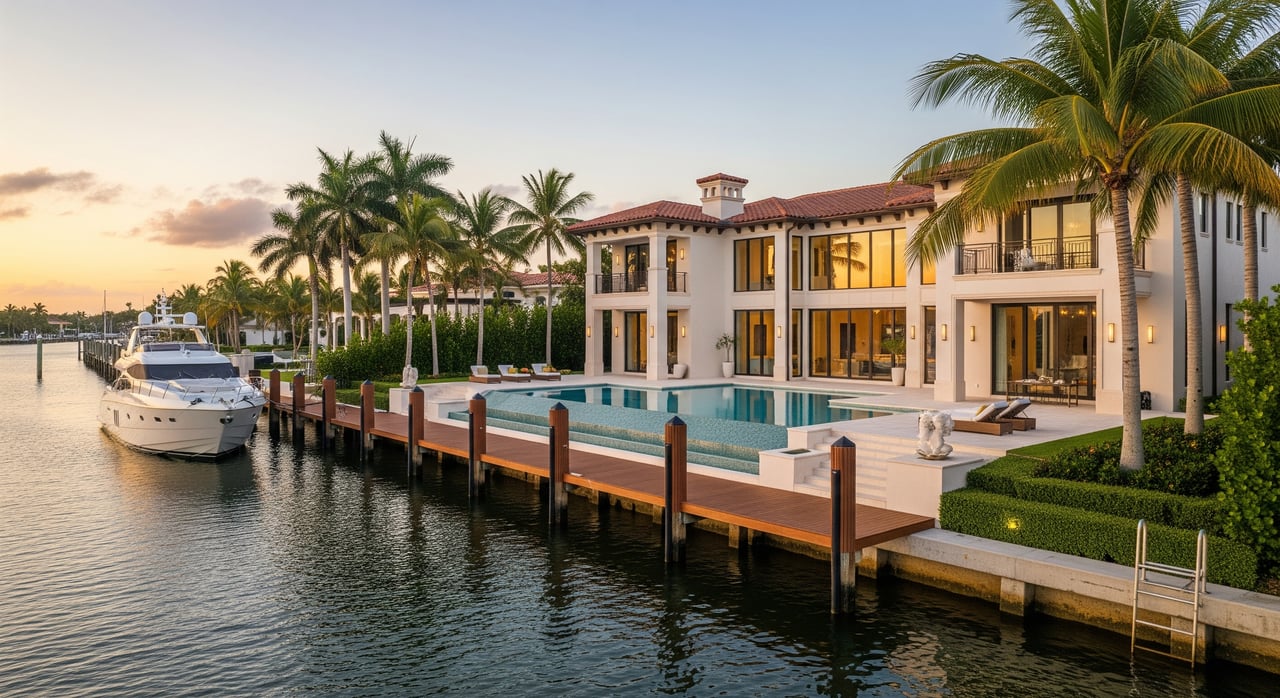
Pricing Waterfront Estates in Boca Raton: A Proven Framework

Pricing a Boca Raton waterfront estate should never feel like guesswork. You are dealing with unique water exposure, complex permits, insurance, and a buyer pool that expects precision. This guide gives you a clear, repeatable framework to set the right price, attract qualified buyers, and protect your outcome at the closing table. Let’s dive in.

Why Boca waterfront pricing is different

Boca Raton’s waterfront is made up of distinct micro-markets. Oceanfront, Intracoastal, canal, and lake properties trade in separate lanes with different buyer priorities and premiums. You need to compare like-to-like or you will miss the mark.

Beyond condition and square footage, value turns on coastal variables. Linear feet of frontage, view corridors, docking capacity, and seawall condition matter. Flood zone, elevation, and insurance costs also influence what buyers will pay.

Market timing and capital conditions play a role. Luxury waterfront demand is seasonal, and cash buyers are common. Interest rates and financing trends can shift the active buyer pool, so it helps to track broader insights from the National Association of Realtors.

The framework: price with precision

Step 1: Build a data packet

Collect the facts that drive price so you can support your number.

  • Parcel details and lot measurements, including total and usable linear feet of waterfront from the Palm Beach County Property Appraiser.
  • Water type and access: oceanfront, Intracoastal, canal, or lake, plus tidal exposure and navigability.
  • Dock specs and permits, lifts, utilities, and condition.
  • Seawall type, age, inspection history, and estimated remaining life.
  • Flood zone and Base Flood Elevation from the FEMA Flood Map Service Center.
  • Building features: GLA, bed/bath count, year built, renovation scope, pool, impact glass, elevator, outdoor living.
  • Comps: 6 to 24 months of closed waterfront sales plus current actives and pendings in the same water body.
  • Preliminary insurance quotes and any open permits or enforcement actions.

Step 2: Build the right comp set

Start in the smallest radius possible. Compare your home to recent closed sales on the same canal, Intracoastal stretch, or beach block. Only expand outward if necessary and never cross water types.

Use closed sales as your foundation, then layer in pendings and actives to capture market tempo. When inventory is thin, be transparent about data limits and document your selection logic.

Step 3: Quantify your waterfront premium

Use a blend of methods to isolate the waterfront value.

  • Direct waterfront comps. Apply line-item adjustments for GLA, lot size, age, condition, dock, seawall, and view.
  • Paired sales. Compare near-identical properties where one has waterfront and one does not. The difference helps you estimate a per-linear-foot premium or a percentage uplift.
  • Per-unit checks. In data-rich pockets, cross-check with price per interior square foot and price per linear foot of frontage. Guidance on specialized approaches is available from the Appraisal Institute.

Step 4: Make disciplined adjustments

Convert differences into dollars using local evidence.

  • Size and area. Adjust by the prevailing interior price per square foot derived from your comps.
  • Waterfront frontage. Apply a per-linear-foot premium estimated from paired sales, and focus on usable frontage.
  • Dock. Add value for permitted length, lifts, utilities, and condition. Deduct replacement and permit costs if non-compliant.
  • Seawall. Deduct the estimated repair or replacement cost plus permitting and engineering. Buyers will price this in.
  • View and privacy. Premiums go to wide, unobstructed views. Proximity to bridges or blocked sightlines reduces value.
  • Condition and modernization. Add a premium for recent, high-end renovations. Deduct realistic cost-to-modernize when needed.
  • Flood and insurance. Use FEMA zone and elevation to estimate premium differences. You can convert higher recurring costs into a price impact by capitalizing the annual difference, or apply a market sensitivity adjustment.

Step 5: Set price bands and timing

Define a conservative list price to drive early activity and an aspirational price to test the market. Be explicit about expected days on market with each choice. Seasonality matters in South Florida. Second-home demand often rises in fall and winter, which can justify tighter pricing.

Tie your strategy to market context. Track inventory and luxury trends through Florida Realtors market research and validate that your chosen band aligns with active buyer depth.

Step 6: Stress test and finalize

Run buyer scenarios. Consider cash versus financed and primary versus investor buyer profiles. Check appraisal risk by comparing your indicated list against recent closed waterfront sales and noting any gap. Document assumptions on items like seawall life and permitted dock length so negotiations stay focused and efficient.

What drives value in Boca waterfront

Waterfront type and exposure

Not all water is equal in buyers’ eyes. Direct oceanfront offers beach access and horizon views. Intracoastal estates often command premiums for boating and privacy. Canal homes vary by canal width, draft, and speed zones. Lakefront and inland water deliver views and calm water, often at different price points than ocean access.

Docking, seawall, and navigability

Serious boaters pay for dock length, lifts, power, and depth. Limited or unpermitted docking reduces demand. Seawalls are major capital items. Many buyers deduct the full replacement cost when condition is uncertain, so a recent inspection and quote can preserve your price.

Elevation, flood, and insurance

FEMA zones and Base Flood Elevation influence premiums and lender requirements. Review your map panel and mitigation features like raised first floors and impact systems. For long-term perspective, some buyers consult the NOAA Sea Level Rise Viewer when assessing resilience.

Permits and coastal regulations

Docks, lifts, and seawalls often involve multiple agencies, including the South Florida Water Management District and the U.S. Army Corps of Engineers. Timelines and compliance costs can be material, so buyers factor this into price. Clean, complete permit files build confidence.

Design, finishes, and outdoor living

Turnkey, coastal-modern design with premium outdoor living drives stronger outcomes. Buyers pay for seamless indoor-outdoor flow, impact windows, pool and spa, summer kitchens, elevators, and guest suites. Older layouts without upgrades face renovation deductions.

Avoid common pricing traps

  • Using non-waterfront or wrong water-type comps that distort value.
  • Ignoring seawall and dock condition or missing permits.
  • Leaning only on interior price per square foot in heterogeneous waterfront pockets.
  • Skipping an appraisal stress test and failing to plan for a gap.
  • Overlooking insurance cost differences tied to flood zone and elevation.

Seller prep checklist

  • Confirm water type, frontage length, and orientation. Photograph sightlines.
  • Pull parcel data and maps from the Palm Beach County Property Appraiser.
  • Gather dock and seawall permits. Order a seawall and dock inspection with written estimates.
  • Pull FEMA flood panel, elevation details, and secure preliminary insurance quotes via your broker.
  • Compile recent renovations, mechanical ages, and warranties.
  • Collect HOA or COA rules that affect docks or rentals.
  • Assemble 6 to 24 months of waterfront comps in your same water body.

How we help you price and win

You want a number you can defend and a marketing plan that reaches qualified buyers. Our approach blends a finance-first valuation, a documented adjustment model, and timing tailored to Boca’s luxury seasonality. We deliver a concise valuation memo with waterfront premiums, adjustment tables, price bands, and likely negotiation items, then pair it with high-impact marketing and global distribution to maximize exposure.

Ready to price your Boca Raton waterfront estate with confidence? Schedule a private consultation with Illustrated Properties Palm Beach.

FAQs

How much extra does waterfront add in Boca Raton?

  • It varies by water type, frontage, docking, view, and current demand, so use paired sales to isolate the premium and validate it against recent closed waterfront comps.

How do seawall issues impact my listing price?

  • Buyers typically deduct the full repair or replacement cost plus permitting and engineering, so secure current contractor estimates and disclose the plan to preserve leverage.

Will my home appraise at the list price in a cash-heavy market?

  • Appraisals on unique waterfronts can lag market premiums, so document adjustments with recent comps and be prepared with strategies for potential appraisal gaps.

How do flood zones and insurance affect valuation?

  • FEMA zone and elevation influence coverage and cost, so price in higher annual premiums and consider capitalizing that cost difference to reflect market sensitivity.

What is the best season to list a Boca waterfront estate?

  • Fall and winter often bring stronger second-home demand in South Florida, so align pricing and launch timing with seasonal buyer traffic and current inventory.

What permits are needed for docks or seawalls in Palm Beach County?

  • Work in navigable waters often involves county review plus agencies such as the South Florida Water Management District and the U.S. Army Corps of Engineers, and timelines can extend for months.

Work With Thomas

Ready to transform your real estate experience? Contact Thomas now to discover how he can guide you with personalized service, exceptional results, and unmatched expertise. Let's achieve your goals together!