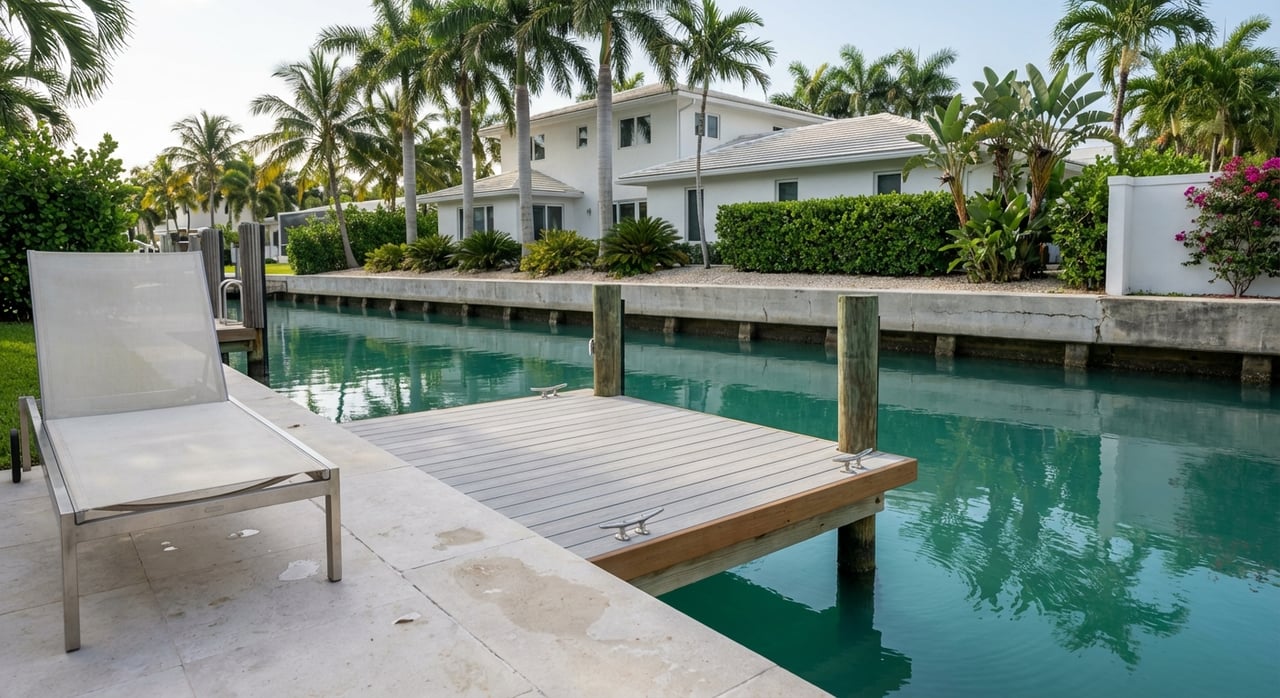
Choosing the Right Boca Raton Waterfront Community
You are buying more than a view when you choose a Boca Raton waterfront. You are choosing daily access to the water, ongoing maintenance, and long‑term value. If you want a property that fits both your lifestyle and your balance sheet, you need a clear plan. In this guide, you will learn how to pick between Intracoastal, canal, lake or oceanfront, how to verify boating access, and what to check for permits, insurance and resale strength. Let’s dive in.
Begin with your boat and routine. Size, draft, beam and how often you run offshore will narrow your options fast. Larger vessels and frequent trips to the Atlantic require a route with no low fixed bridges and a reliable inlet.
Confirm the practical details before you fall in love with a view. Check bridge clearances and drawbridge schedules using the city’s marine resources on Boca Raton Marine Information. If offshore runs are part of your plan, study current inlet notes for the Boca Raton Inlet, which is popular but known for shifting sand bars.
If your boating is casual or you prefer calm water, lakefront or protected canals can deliver easy days and lower daily wear on docks and seawalls. For occasional marina access and guest berths, review resort options on Lake Boca at The Boca Raton’s marina.
You get sheltered north and south cruising with frequent service stops. Many homes and condos offer private docks or association slips. If you want regular boating without open‑ocean exposure, this can be ideal. Use the city’s Marine Information to confirm bridge operations along your route.
Tradeoffs include boat traffic and wakes, plus bridge timing for larger vessels. Verify whether nearby canals have fixed bridges that limit your mast or flybridge height.
You get direct beach access and unobstructed views. For larger yachts, most owners use full‑service marinas rather than private oceanfront slips due to surf and inlet navigation. See local marina context at The Boca Raton’s marina.
Expect higher exposure to wind and surge, and tighter coastal construction rules. Shoreline work near dunes is more regulated and permits can be complex.
You get calm, protected backyard dockage and quick access to the Intracoastal in many channels. This is a favorite setup for owners who want a slip behind the house and short runs to the inlet.
Tradeoffs include seasonal shoaling and the need for owner‑funded maintenance in some areas. Local reporting has covered how shifting sand near the inlet can affect routes, so plan on verifying recent conditions and dredging history. For context, see inlet shoaling coverage from The Coastal Star.
You get calm water for small craft and a relaxed setting with lower daily wake exposure. It suits paddle craft and smaller boats. For offshore trips, you will use a marina or trailer, since there is no direct ocean access. Review transient and guest options at The Boca Raton’s marina.
Ultra‑prime Intracoastal frontage plus a private club and marina define this enclave. Review club details and marina access on the official Royal Palm Yacht & Country Club site. Recent news, including a reported $40 million teardown sale, highlights how rare deepwater frontage and acreage can drive record pricing, as covered by the Wall Street Journal.
Buyer focus: align club membership terms and marina use with your ownership plan. Confirm guest and crew access rules before you go to contract.
A guard‑gated Intracoastal enclave with private canal access and a community marina. It advertises 24‑hour security and dockage options for many homes. Explore community details on The Sanctuary’s official site.
Buyer focus: review HOA fees, marina policies and any waitlists for slips.
A network of canals with many routes that avoid fixed bridges and offer short runs to the inlet. Lots often provide strong linear water frontage and immediate backyard docking.
Buyer focus: confirm canal width, turning basins, and any recent dredging records through seller disclosures or HOA minutes.
This gated waterfront community illustrates association‑managed dockage and a manned gate. Similar nearby neighborhoods offer a range of product types from townhomes to estate homes with direct Intracoastal access.
Buyer focus: verify whether slips are deeded or assigned, plus transfer rules on sale.
Operational realities can make or break a home’s fit for your boat. Use this quick checklist:
Waterfront ownership includes responsibility for seawalls, docks and lifts in most cases. Plan ahead for permits and engineering.
Understand the property’s baseline risk and long‑term exposure. Start with the county’s FEMA resources for flood zones at Palm Beach County FEMA maps. Then obtain quotes early for flood and wind coverage. Under FEMA’s Risk Rating 2.0, pricing is property specific. Learn how this works in practice from the LSU AgCenter’s overview.
A higher finished floor, quality drainage and a strong seawall can support value over time. If you plan improvements, align designs with permitting and environmental guidance to protect both the shoreline and your investment.
Use this sequence to avoid surprises and protect value:
In Boca Raton, premiums tend to cluster around a few core traits. Direct deepwater access with no fixed‑bridge limits, large lot size and strong linear frontage, high‑quality seawall and dock infrastructure, and proximity to the beach and downtown all matter. Club and community amenities can amplify value, as seen in top sales around Royal Palm. For a recent example of market strength at the ultra‑luxury tier, review the Wall Street Journal’s coverage.
You can reduce risk and protect resale by confirming permits, keeping infrastructure in top condition, and aligning your waterfront type with how you actually use the water.
Ready to match your lifestyle with the right Boca waterfront and buy with confidence? Schedule a private consultation with Illustrated Properties Palm Beach to chart the best path.
Stay up to date on the latest real estate trends.

Ready to transform your real estate experience? Contact Thomas now to discover how he can guide you with personalized service, exceptional results, and unmatched expertise. Let's achieve your goals together!