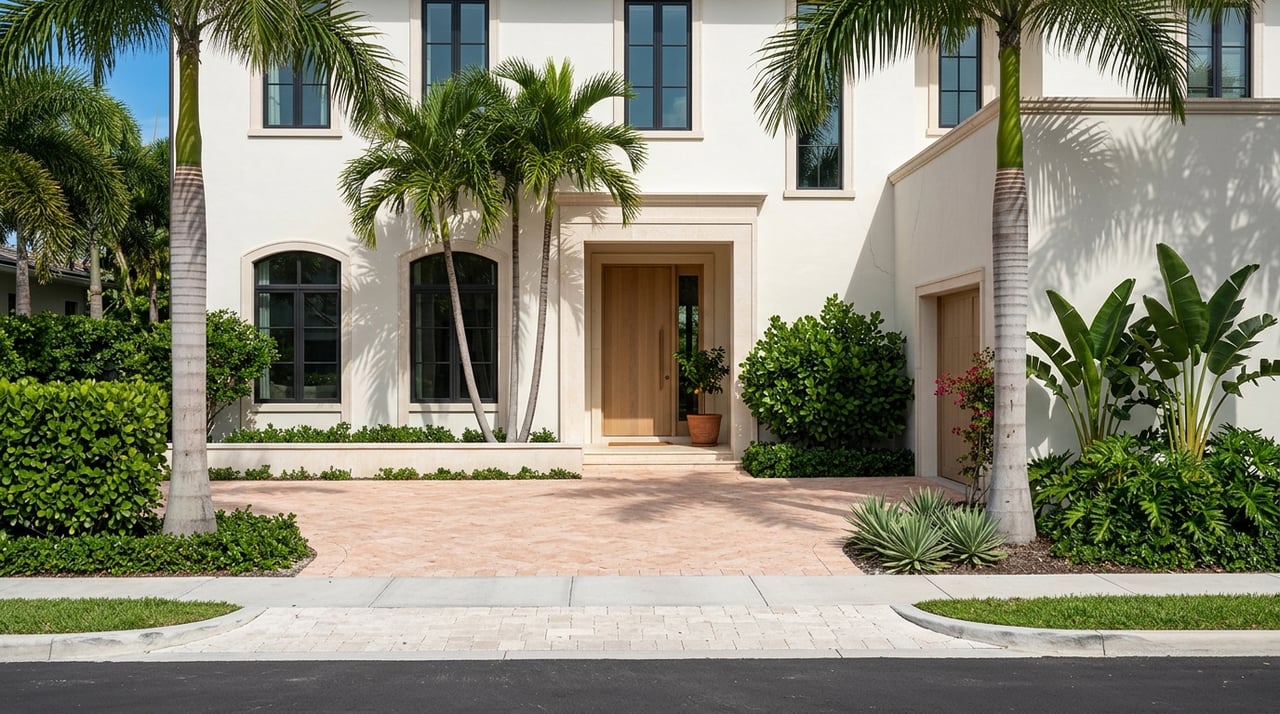
Palm Beach In-Town vs Estate and North End
Palm Beach can feel like three different markets on one island. If you are trying to decide between in-town, the North End, or the Estate Section, the right answer usually comes down to how you want to live there day to day. This guide breaks down the real differences in access, setting, lot scale, and housing patterns so you can narrow your search with more confidence. Let’s dive in.
Palm Beach is a barrier-island town with about 9,000 year-round residents and roughly 20,000 seasonal residents. That seasonal swing can change traffic, sidewalk activity, and the overall pace of daily life depending on where you buy.
The town also offers 12 miles of beachfront, two public beaches, a town marina, and a nearly six-mile Lake Trail. Because of that, your location choice is often less about distance on a map and more about whether you value walkability, beach access, or privacy most.
It is also worth knowing that in-town, North End, and Estate Section are market terms, not formal town zoning labels. Palm Beach officially organizes land into estate residential, neighborhood residential, multi-unit residential, and commercial districts, which helps explain why each area feels distinct.
In-town is best understood as the central, walkable core of Palm Beach. Town operational maps and parking rules point to areas around Worth Avenue, South County Road, Four Arts Plaza, the 100 block of Royal Palm Way, South Ocean Boulevard and Hammon Avenue, plus nearby commercial streets.
The town’s comprehensive planning framework also identifies commercial activity near Royal Poinciana Way and Royal Poinciana Plaza. In practical terms, this is the part of Palm Beach where daily errands, dining, and shopping are most concentrated.
If you want Palm Beach to function as an easy, low-friction base, in-town often makes the most sense. This area tends to appeal to buyers who want to walk to dinner, access shops quickly, and stay close to marina and bridge approaches.
It can also be a strong fit if you prefer a property that is simpler to lock and leave. The nearby zoning framework includes attached and multi-unit housing forms, which supports a lower-maintenance housing mix than you typically find in larger-lot estate areas.
The town code allows a mix of detached homes, two-unit attached dwellings, townhouses, and moderate-scale multi-unit buildings in nearby central residential districts. That variety creates a more compact and flexible residential environment.
Lifestyle-wise, in-town has the most visible seasonal energy. During the winter season, this is where you are most likely to notice active sidewalks, more traffic, and the broadest mix of restaurants and shops.
The main advantage of in-town is access. You are choosing convenience, walkability, and a more connected daily routine.
The tradeoff is that the setting is generally less private and more visitor-oriented than other parts of the island. If you want a quieter residential atmosphere or a larger land footprint, you may find a better fit elsewhere.
The North End is often understood through the town’s own operational map references to Royal Poinciana, Main Street, Seminole, Bradley Place, Park, North County, and parts of Sunset and Sunrise avenues. It aligns closely with neighborhood-style residential areas rather than the central commercial core.
That distinction matters because the North End usually reads as more residential and less activity-driven than in-town. It still offers strong access to town amenities, but the day-to-day feeling is quieter.
The North End is generally oriented to single-family residential living, with some flexibility in certain districts. In the town’s neighborhood framework, one district is single-unit detached only, while another also allows two-unit attached dwellings and townhouses.
Lot sizes here are materially smaller than in the Estate Section, but they are still meaningful by island standards. Minimum lot areas commonly start at 10,000 square feet, with 7,500-square-foot minimums on certain Sea Streets.
For many buyers, the North End hits a middle ground. You get a quieter residential setting than in-town, without moving into the larger-scale, more formal estate environment farther south.
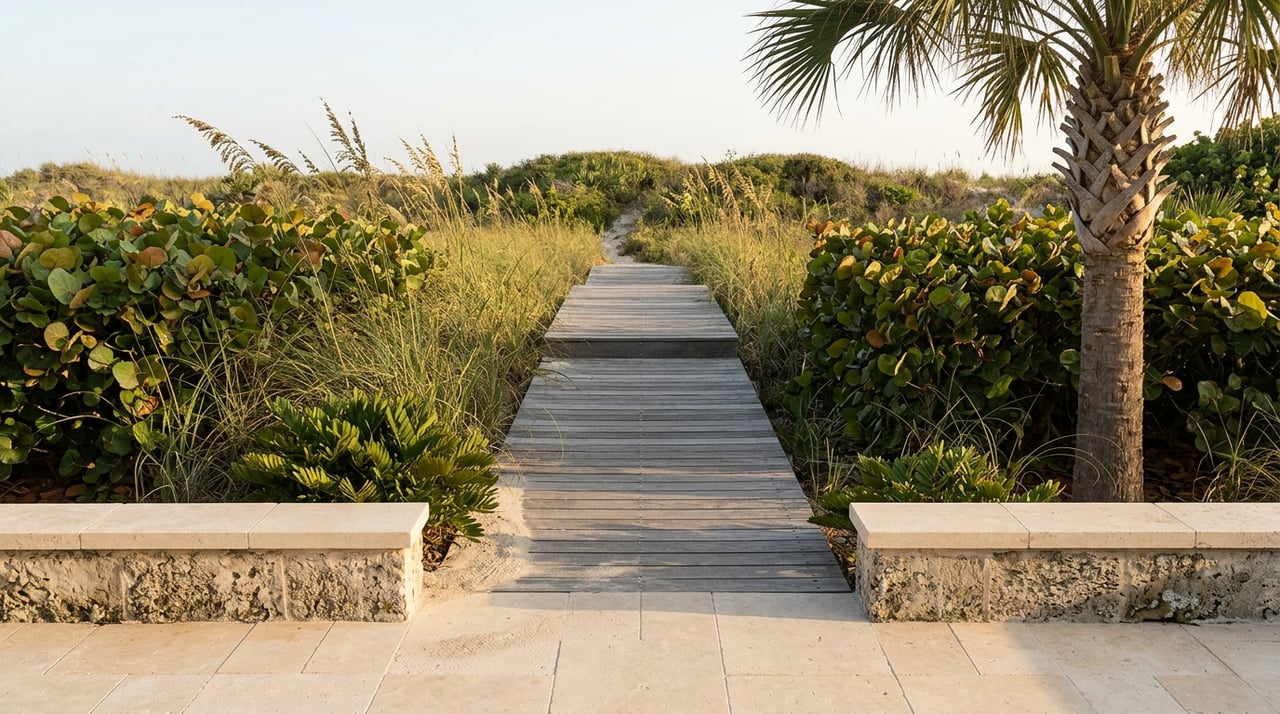
This area is especially appealing if your ideal Palm Beach routine includes biking, walking, and regular beach time. The Lake Trail runs from the Royal Park Bridge to the North End of the island, and the town notes beach access from Barton Avenue to Seaspray Avenue and from Sunset Avenue north to Wells Road.
The North End is often about residential calm and coastal access. If your priority is a beach-and-bike lifestyle, it can be one of the clearest fits on the island.
The tradeoff is that it is usually less walkable to the main dining and shopping corridors than in-town. If you want to step out your door and be in the center of retail activity right away, in-town may still be the better match.
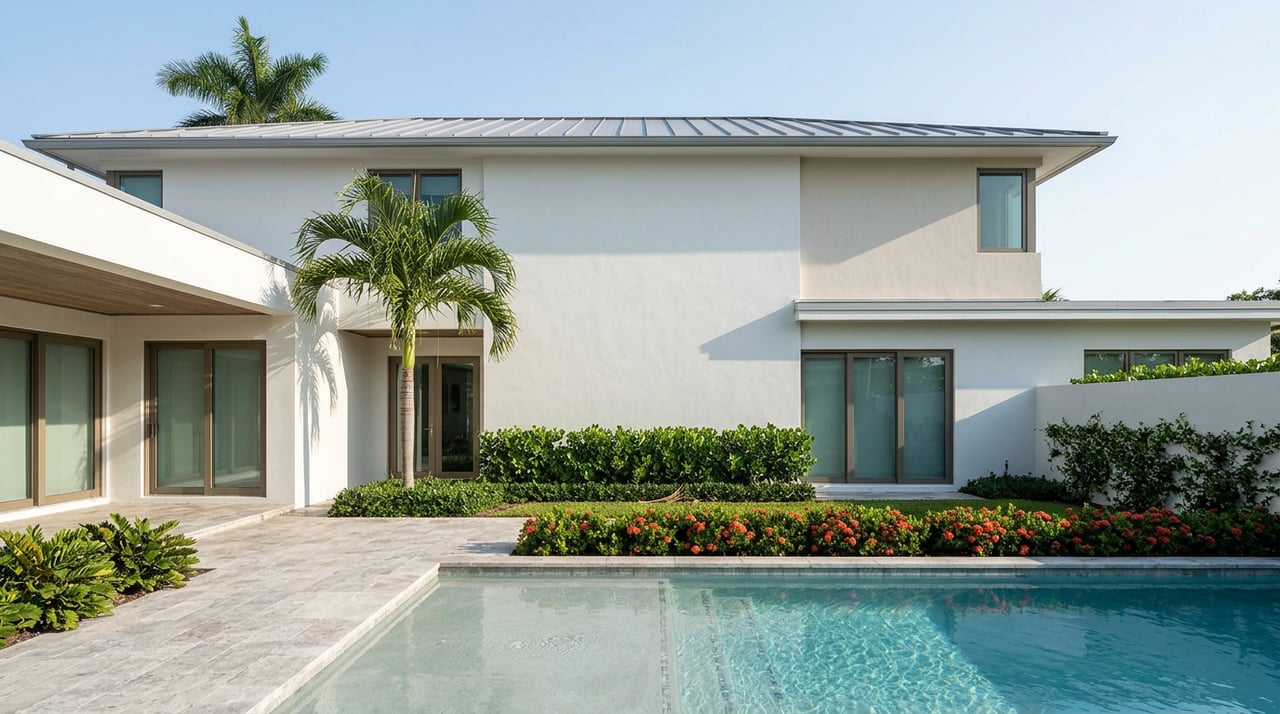
The Estate Section is Palm Beach’s clearest large-lot residential category. The town’s estate living districts are intended for single-unit detached estate living, with minimum lot areas of 60,000 square feet in one district and 20,000 square feet in another.
Those standards make one point very clear: the Estate Section is about land, scale, and presence. If your search begins with privacy and a more substantial homesite, this is the area many buyers evaluate first.
Palm Beach’s broader estate tradition is closely tied to early 20th-century design and a legacy of notable architects such as Addison Mizner, Marion Sims Wyeth, and Maurice Fatio. Mediterranean Revival and European-inspired elements became part of the town’s design vocabulary.
That architectural legacy still matters today because Palm Beach has an active preservation framework. Since the town adopted its Historic Preservation Ordinance in 1979, certain older homes and districts may be subject to added design review considerations.
If you want Palm Beach to feel like a private compound rather than a convenient pied-à-terre, the Estate Section often stands out. Buyers drawn here usually place the highest value on lot size, gardens, architecture, and separation from the busiest parts of town.
This area can be especially compelling if the home itself is the centerpiece of the ownership experience. In that case, proximity to retail may matter less than privacy, formal grounds, and estate-scale living.
The Estate Section offers the most privacy and the most substantial lot profile of the three options. It is generally the least about walk-to-dinner convenience and the most about the residence as a destination.
That tradeoff is important to be honest about early in your search. If you picture frequent casual outings on foot, in-town may align better with how you actually plan to use the property.
In-town is usually the strongest fit if you want daily convenience. Buyers who prioritize walkability, nearby restaurants and shops, marina access, and a lower-maintenance ownership style often start here.
The North End is a strong choice if you want a quieter neighborhood setting with beach and trail access. It often works well for buyers who want Palm Beach to feel relaxed and residential, while still staying connected to the island’s amenities.
The Estate Section usually makes the most sense if privacy, lot size, and architectural presence lead your decision-making. If you see the home as a long-term lifestyle asset and want estate-scale living, this area often rises to the top.
Even after you narrow the area, details still matter. The town actively manages parking, marina logistics, and coastal access, so exact convenience can vary from one address to the next.
Before you tour seriously, it helps to confirm:
For high-value purchases, this is where a finance-first, location-specific review can save time. Two homes can share a Palm Beach address and still offer very different lifestyle utility and long-term fit.
If you are weighing these three Palm Beach micro-locations, the smartest move is to match the property to your actual use case. A walkable in-town residence, a beach-centered North End home, and an Estate Section property can all be excellent choices, but they solve for different priorities.
That is where local market context matters. If you want discreet guidance on which Palm Beach setting best fits your lifestyle or investment goals, schedule a private consultation with Illustrated Properties Palm Beach.
Stay up to date on the latest real estate trends.
Ready to transform your real estate experience? Contact Thomas now to discover how he can guide you with personalized service, exceptional results, and unmatched expertise. Let's achieve your goals together!