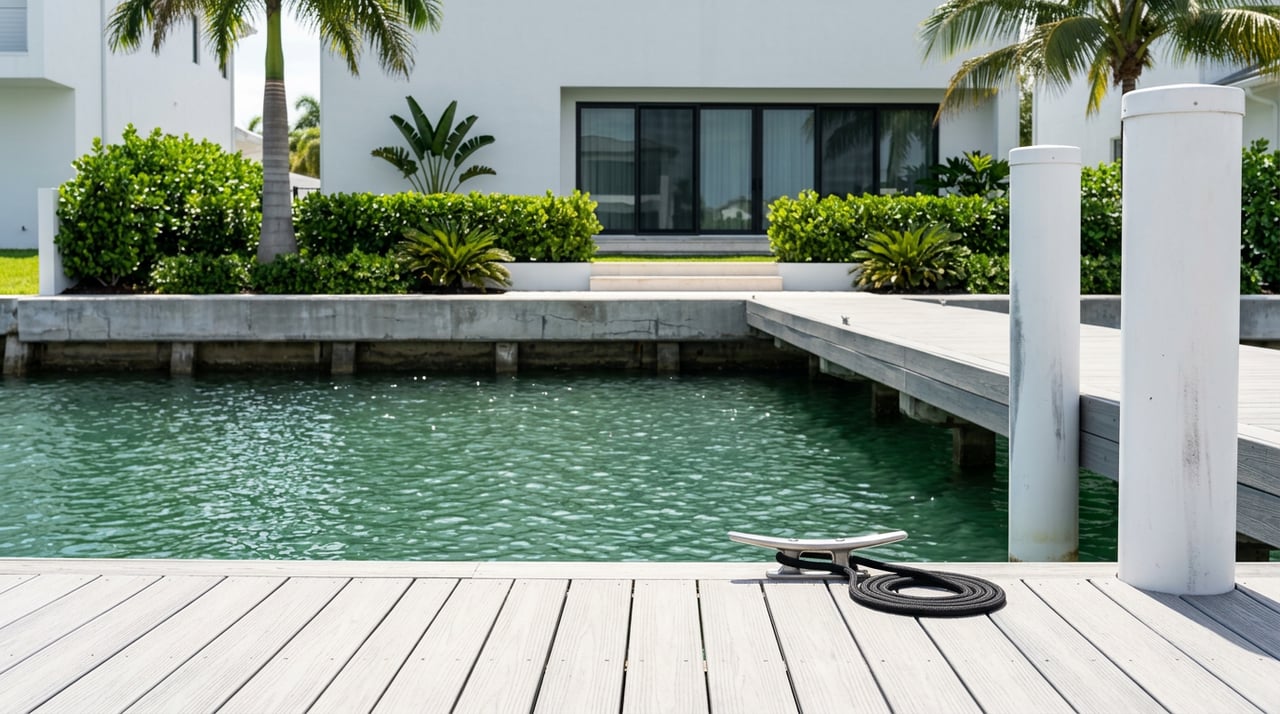
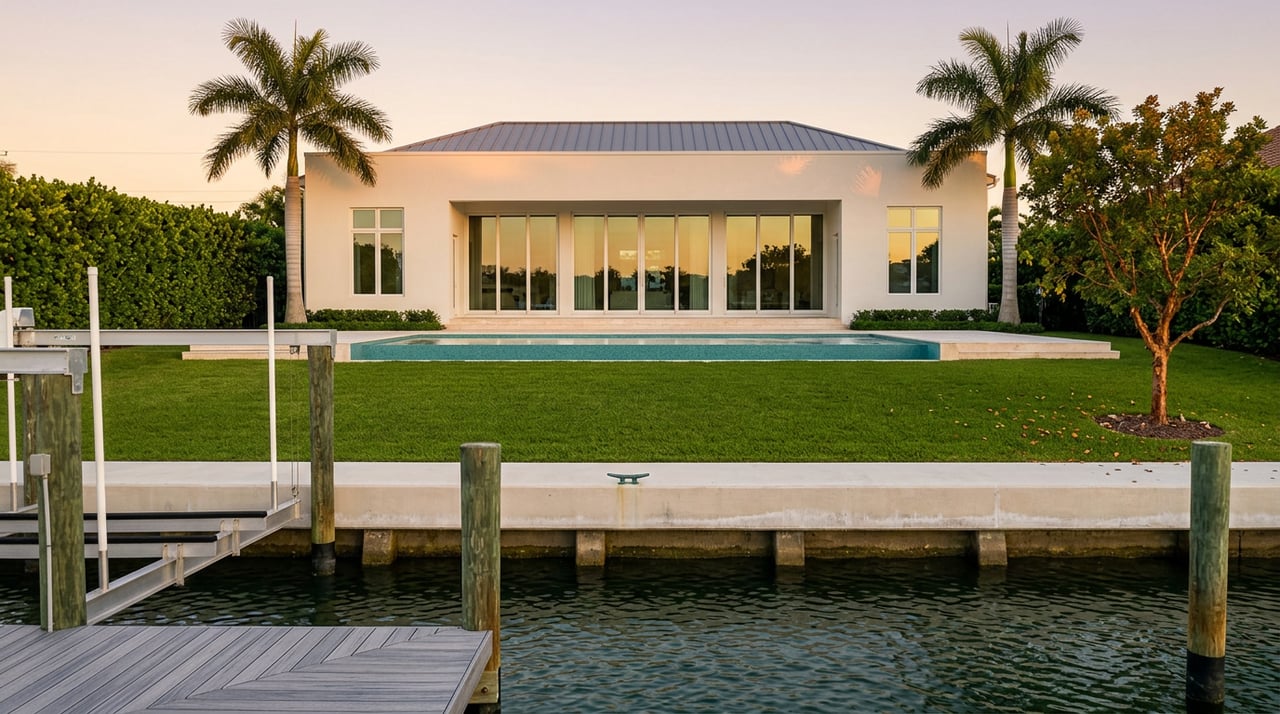
If you own a boat, the right North Palm Beach canal home is more than a view. It is a set of specs that determines whether you can reach the ocean quickly and safely. Depth at your dock, bridge clearances, and distance to the inlet all drive day-to-day usability and long-term value. In this guide, you will learn what “deep-water” really means here, which constraints matter most, and how to vet a listing with a simple, proven checklist. Let’s dive in.
What “deep-water” means here
In North Palm Beach, deep-water usually refers to canal or marina approaches that can handle midsize yachts with comfortable under-keel margin and no low fixed-bridge traps on the way to the ocean. Local marinas near Old Port Cove commonly cite approach and dock depths in the 8 to 12+ foot range and promote “minutes to the inlet,” which is a strong practical advantage for offshore runs. You can see a representative example in the published details for Safe Harbor Old Port Cove.
Depths and chart datum
Depth numbers are only meaningful when you know the datum. Charts and marina specs are often referenced to Mean Low Water. If you leave at high tide, the water is higher, which reduces your under-keel margin against the published depth. Always confirm the datum, then do the tide math using the NOAA Chart Viewer and tools.
Bridges and air draft
Your air draft controls which bridges you can pass without an opening. In the north-county corridor, several drawbridges open on a schedule, while some fixed spans have limited clearance. One local example is the Donald Ross Road drawbridge, commonly listed at 35 feet closed and opening on the hour and half hour. Check current status before you buy, because outages do occur. See the Donald Ross bridge listing for a sense of published clearances and schedules.
Proximity to the inlet
Shorter runs to the Lake Worth or Palm Beach Inlet save time and reduce wear. North Palm Beach’s Old Port Cove area is prized for quick access, which is why nearby marinas highlight proximity in their marketing. That time savings is a real quality-of-life and value driver if you fish offshore or make frequent Bahamas runs.
Dock & Boat Compatibility Checklist
Use this 10-step process before you make an offer on any North Palm Beach deep-water canal home.
- Define your boat
- Record LOA, beam, loaded draft, and air draft with antennas and arches both raised and lowered. Measure the boat as you run it. For safe planning fundamentals, review BoatUS guidance.
- Map your route to the ocean
- Trace the path from the dock through the canal, into the ICW or lagoon, then out the inlet. Mark every bridge. Use the NOAA Chart Viewer to plot precisely.
- Check each bridge
- For every span on your route, note the published closed clearance and its datum, whether it is fixed or movable, the opening schedule, VHF channel, and tender phone. Confirm any temporary changes or outages. The Donald Ross bridge page is a useful example of how data is listed; always verify against official sources.
- Confirm depths at the property
- Ask for recent soundings at the canal face referenced to the chart datum. If none exist, commission a survey. Clarify who maintains dredging for the canal. Public channels differ from private canals, and responsibility affects your ongoing costs.
- Compute real margins with tides
- Convert published depths and clearances to your planned transit time using tide predictions. Add a conservative buffer under the keel, often 1 to 2 feet or more depending on vessel size, plus an air-draft safety margin. When margins are tight, hire a local captain and run a test.
- Check canal geometry and dock specs
- Confirm canal width, turning room, piling spacing, finger pier length, cleat layout, and available shore power. Local marinas publish specs for reference; see the services listed for Safe Harbor Old Port Cove as a benchmark to request similar details for a private dock.
- Run a test transit
- Make a full route run in calm weather at a representative tide with your normal load. Capture GPS track and depth logs. If a seller resists a test run, treat it as a red flag.
- Insurance and services
- Ask your marine insurer whether dock configuration and waterway exposure change premiums or coverage limits. Plan your fueling and service routine at nearby marinas, and confirm hours and approach depths.
- Permits, seawall, and easements
- Verify dock permits, seawall condition, and any encroachments with local authorities. If the dock is grandfathered, ask what a future replacement would require.
- Compare submarkets by functionality
- If you weigh North Palm Beach against Jupiter or Palm Beach Gardens, frame access as a line item: distance to inlet, number of bridges passed, and approach depths. For quick local clearance snapshots, resources like this Jupiter-area bridge list can help, but always confirm with NOAA and official notices before you buy.
Local access trade-offs
North Palm Beach strengths
Old Port Cove and nearby canal systems combine sheltered water, marina support, and short runs to the Lake Worth or Palm Beach Inlet. Many slips and approaches are published in the 8 to 12+ foot range, aligning well with midsize yachts. See a representative profile at Safe Harbor Old Port Cove.
Jupiter considerations
Jupiter offers a fast shot to the Atlantic through Jupiter Inlet for many routes. That said, drawbridges such as Donald Ross and Indiantown add scheduling and reliability considerations. The Donald Ross bridge is commonly cited as 35 feet closed, with scheduled openings. Always check current operations before you commit to a property that relies on frequent openings. Reference the Donald Ross bridge listing for how to read clearance and schedule data.
Palm Beach Gardens nuances
Homes near PGA Boulevard sit between North Palm Beach and Jupiter. Bridge clearances and route choice often decide whether a property is friendlier to large center consoles versus masted sailboats. Use official NOAA chart tools to map your exact path and identify the limiting span.
How specs drive value
- Functionality moves price. A canal home that cannot reliably float your intended boat or pass a key bridge without frequent delays is worth less to you than a similar home with clean ocean access.
- Proximity to inlets and marina services often carries a premium. North Palm Beach marinas emphasize approach depths and quick inlet runs for a reason. Those features attract active boat owners and can improve resale liquidity. See how marinas highlight these points in profiles like Safe Harbor Old Port Cove.
- For offers and appraisals, compare against recent sales of truly comparable deep-water properties in the same micro-market. Adjust for approach depth, number and type of bridges, and travel time to the inlet.
Common mistakes to avoid
- Relying on a single depth number without the datum or tide context.
- Ignoring air draft. The lowest fixed bridge on your route controls everything.
- Skipping a test transit for a tight canal or marginal depth.
- Assuming dredging is public when the canal is private.
- Overlooking shore power, piling spacing, and finger pier dimensions.
Next steps
If you want a North Palm Beach canal home that works as hard as your boat does, bring your vessel specs and this checklist to your first tour. We will map your route, confirm the bottlenecks, and quantify the value of fast, reliable access before you bid. Ready to evaluate specific listings with a finance-first lens and local on-water knowledge? Schedule a private consultation with Illustrated Properties Palm Beach.
FAQs
What is a deep-water canal in North Palm Beach?
- It is a canal or marina approach with sufficient depth at chart datum, clean routes to the inlet, and no low fixed bridges that block your vessel, often aligning with the 8 to 12+ foot approaches local marinas publish.
How do I verify canal depth at a listing?
- Ask for recent soundings referenced to chart datum and confirm with the NOAA Chart Viewer; if none exist, commission a survey before closing.
Which bridges often affect access near Jupiter?
- The Donald Ross Road drawbridge is a common constraint, listed around 35 feet closed with scheduled openings; check the current listing details before you buy.
Why does “minutes to the inlet” matter?
- Shorter runs cut transit time, fuel burn, and schedule risk; North Palm Beach’s Old Port Cove area is noted for quick access, reflected in marina profiles like Safe Harbor Old Port Cove.
How much under-keel clearance should I plan?
- A conservative rule for small recreational boats is at least 1 to 2 feet under the keel, with more for larger vessels; see BoatUS safety guidance and tailor margins to conditions.
What if my air draft is close to a fixed bridge?
- Treat it as a hard limit or plan for lowering antennas or arches if designed for it; if the margin is under several inches, run a test with a local captain at a representative tide.