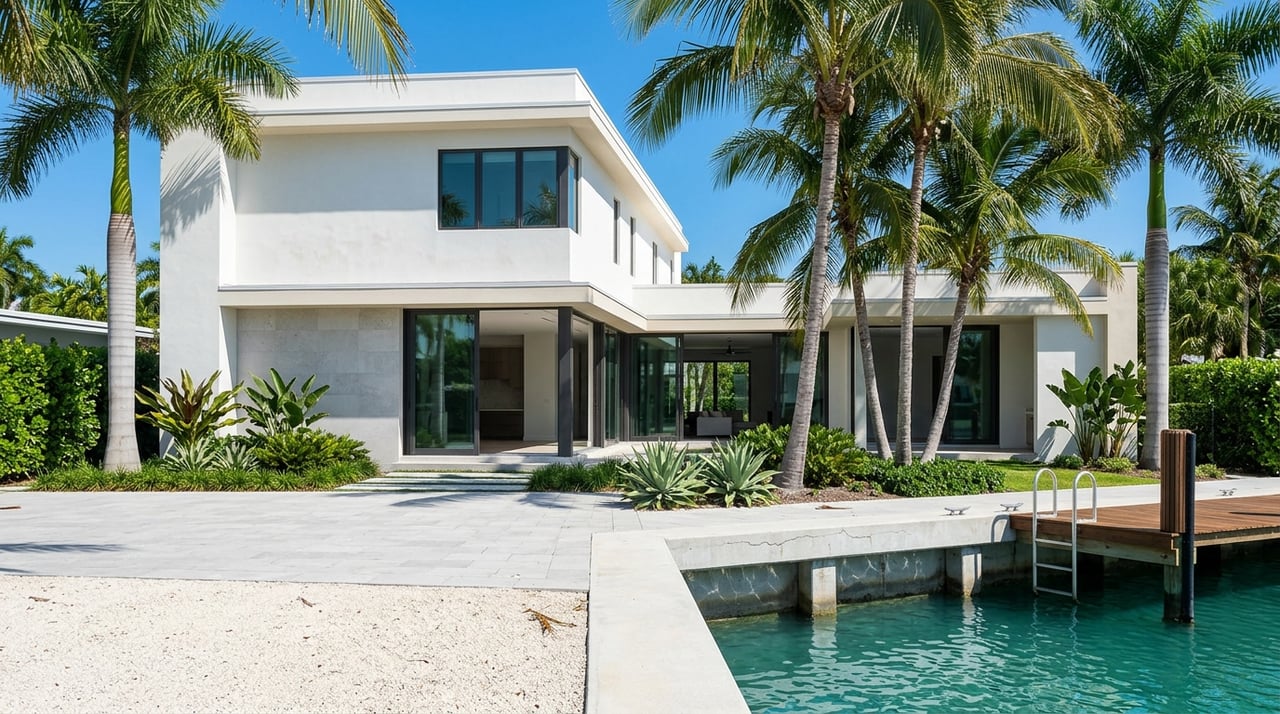
Jupiter Island New Construction Estates: A Lot Planning Guide
If you are thinking about building new on Jupiter Island, the lot is not just where the house goes. It is the foundation of the entire investment. On a narrow barrier island with limited vacant land, your parcel can shape everything from privacy and views to permitting, dock potential, and long-term ownership costs. This guide will help you understand what matters most before you buy or design, so you can move with more clarity and fewer surprises. Let’s dive in.
Jupiter Island is a low-density residential community on the south end of Martin County with about 1,643 acres, roughly nine miles of Atlantic frontage, and the Intracoastal Waterway to the west. The town describes the area as centered on single-family estates, conservation, and preservation, with remaining vacant land designated for single-family residential, recreational, and conservation uses. In simple terms, buildable land is limited, and lot quality carries real weight.
Because the island is narrow, orientation matters more than many buyers expect. Your lot position can affect sun exposure, privacy, wind conditions, storm exposure, and how the water edge supports your plans. That is why a strong purchase decision starts with the parcel itself, not just the future house concept.
The first question is what type of site you are buying. Oceanfront lots can offer direct Atlantic exposure, but they may also involve a different permitting path and more coastal constraints. West-side waterfront parcels may present dock and boating opportunities, but those features need to be confirmed on a site-specific basis.
Interior lots can simplify some waterfront issues, yet they still need close review for setbacks, landscape requirements, and flood-related design limits. On Jupiter Island, each lot type creates a different development path. That is why parcel-by-parcel analysis matters.
A luxury lot can look large on paper and still produce a tighter building envelope than expected. Current town ordinance language indicates that a principal dwelling may not exceed 10,000 square feet. Accessory living quarters are capped at one-third of the principal dwelling.
Setbacks also shape what you can actually build. The front yard requirement is 50 feet, side-yard setbacks vary by lot width and story count, and at least 50 percent of the lot must remain landscaped. Waterfront lots also follow separate rear-yard rules, so shoreline frontage does not automatically mean flexible building placement.
On Jupiter Island, elevation strategy should be part of the first design conversation. Recent ordinance activity shows the town has been adjusting fill and building-height criteria, including the initial measuring point used for height review. That means grading and floor elevation are not minor engineering details. They can directly affect design, massing, and feasibility.
If you wait too long to review these issues, the redesign process can become expensive. A strong early team can test practical house size, site layout, and elevation assumptions before you get too far into plans.
The town states that all development or improvement in the floodplain requires permits and instructs owners to contact the Building Official before construction. For that reason, flood-zone review should happen at the start of due diligence, not after closing. It is a core part of understanding whether your vision fits the parcel.
Floodplain conditions can influence finished floor height, site drainage, and overall construction planning. On a coastal barrier island, those factors can also affect timelines and budget. If you are evaluating a redevelopment opportunity, flood review should be treated as a major decision point.
For oceanfront sites, Florida’s Coastal Construction Control Line program may apply. The Florida Department of Environmental Protection states that construction or excavation seaward of the CCCL generally requires a permit. The program is designed to protect dunes, coastal vegetation, adjacent property, public beach access, and marine turtles.
That makes oceanfront development meaningfully different from building on an inland parcel. Even if a lot appears straightforward, coastal jurisdiction can change the approval path, consultant needs, and project sequencing. If you are comparing multiple sites, this is one of the most important distinctions to understand early.
Jupiter Island has also adopted a special waterfront setback line framework, including recent procedural updates and line adjustments. The practical takeaway is simple: waterfront frontage alone does not confirm full buildability. The usable envelope should be verified for the specific parcel.
This matters whether you are focused on a larger residence, outdoor living space, or a marine component such as a dock or lift. A site can be beautiful and still require design tradeoffs. Confirming those tradeoffs early helps protect both your capital and your timeline.
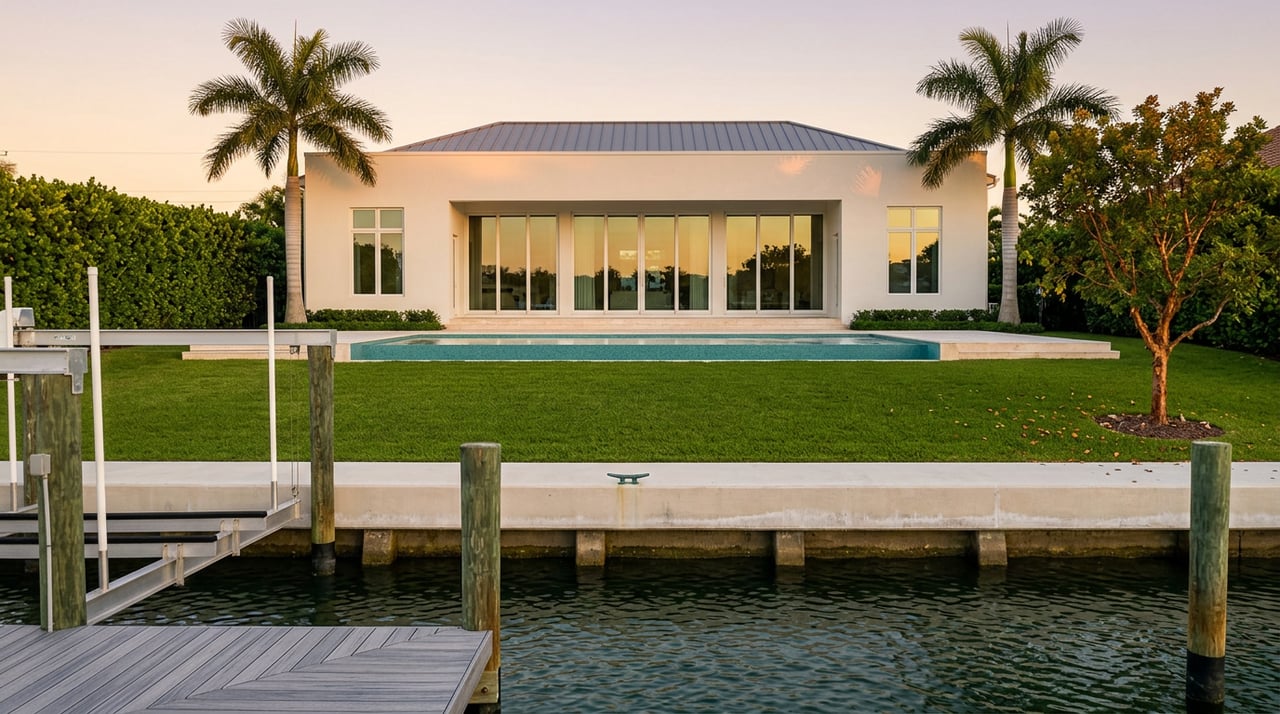
If boating access is part of your lifestyle plan, do not assume a waterfront lot is automatically dock-ready. The town provides dock and boat-lift permit materials, and its permit application notes that additional approvals may be required from water management districts, state agencies, or federal agencies. Some single-family dock projects may qualify for self-certification of exemption through the state, while more complex work may require additional environmental resource permitting.
In practical terms, dock feasibility should be reviewed before you underwrite the lot around it. Water depth, shoreline shape, seawall condition, adjacent structures, and access geometry can all affect what is possible.
Waterfront buyers should also pay attention to mangroves and shoreline vegetation. The Florida Department of Environmental Protection states that mangrove trimming and alteration are regulated and may require a permit or a professional mangrove trimmer. If a parcel has shoreline vegetation, that can influence access planning, dock placement, and future maintenance.
This is one more reason why a visual walk-through is not enough. A technical site review can help you understand what can stay, what may be limited, and what approvals may be needed.
Luxury homes often include layered lighting across the residence, landscaping, pool, entry sequence, and dock. On Jupiter Island, exterior lighting is tightly regulated. The town’s residential lighting rules and self-certification materials require lighting to avoid excessive or misdirected spill, limit trespass, and comply with sea-turtle lighting standards, with dock lighting regulated separately.
For buyers building a custom estate, lighting should be planned as one coordinated system. If lighting is handled in fragments, compliance issues and redesign risk can follow. A thoughtful plan protects both aesthetics and approvals.
The town’s Building Department handles zoning, permitting, plan review, inspections, contractor licensing, and code enforcement. Permit materials request details such as the architect or engineer, building height, number of stories, flood zone, and, when applicable, Development Review Board approval date. The town also provides a pre-application development form and a development applications procedure document.
That is a strong sign that complex residential projects benefit from early coordination. On Jupiter Island, permitting is not just a filing step. It is a process that rewards preparation.
The Development Review Board is the town’s key local review body for certain variances and for determining whether a proposal is of the same general character under the land-development rules. The board meets monthly. For a custom residence, that means site planning and architectural coherence can become part of the review path.
This does not mean every project becomes adversarial. It means thoughtful planning matters. Buyers who enter the process with a complete and locally informed team are often in a better position to move efficiently.
Given the number of local approvals, coastal overlays, flood considerations, and waterfront permitting issues involved, this type of project usually benefits from a coordinated consultant team. That often includes a local broker or market advisor, land-use attorney, surveyor, architect, civil engineer, marine or dock specialist, and a builder familiar with Jupiter Island’s process.
The goal is not to overcomplicate the purchase. The goal is to reduce uncertainty before it becomes expensive. In a market where land is scarce and each parcel behaves differently, disciplined due diligence can protect both lifestyle goals and asset value.
The town publishes seasonal construction hours and no-construction holiday dates, which can affect mobilization and sequencing. Utility coordination should also be reviewed early, with SMRU providing water and wastewater services on Jupiter Island and the Hobe Sound mainland.
These details may seem secondary during a purchase search, but they can affect your schedule once planning begins. For a custom build, execution quality often starts with realistic timing assumptions.
Before you move forward on a Jupiter Island luxury lot, focus on a few key questions:
When you answer these questions early, you gain a clearer view of the lot’s real value. That is especially important in a tightly constrained, high-end coastal market like Jupiter Island.
In a market like Jupiter Island, the difference between a strong lot and the right lot can be substantial. A parcel may look compelling based on frontage, location, or asking price, yet still carry design limits or approval hurdles that change the economics of the project. Buyers who approach the process with financial discipline and local insight are better positioned to make confident decisions.
If you are evaluating a luxury lot, custom estate site, or waterfront redevelopment opportunity, precision matters. Working with an advisor who understands both asset value and site complexity can help you assess not just what a parcel is, but what it can realistically become.
If you are considering a new build or land acquisition in this market, Illustrated Properties Palm Beach can help you evaluate the opportunity with a clear, strategic lens and boutique guidance tailored to luxury coastal property decisions.
Stay up to date on the latest real estate trends.

Ready to transform your real estate experience? Contact Thomas now to discover how he can guide you with personalized service, exceptional results, and unmatched expertise. Let's achieve your goals together!